News3 min read
Education Ministry to introduce ‘school report cards
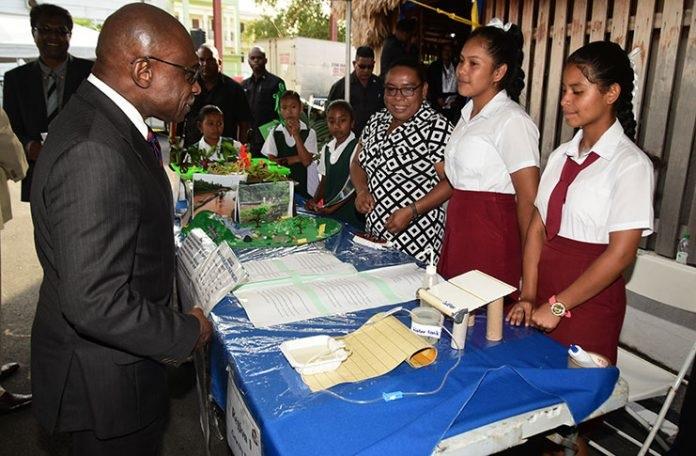
Education Minister Sonia Parag
Published by Randy Daniels
Education Minister Sonia Parag
–in push for accountability, higher performance
SCHOOLS across Guyana are expected to receive performance-based report cards for the first time, as the Ministry of Education moves to strengthen accountability and drive improvement across the education system, Education Minister Sonia Parag has announced.
Speaking during an interview on the Starting Point podcast set to air today, Minister Parag said the initiative, which could be introduced as early as 2026, comes at a time when the government has significantly expanded investment in education infrastructure and resources.
“We’re building schools, we’re ensuring that resources are placed in schools for students to be able to benefit from that,” she said, adding: “So, we also have to look at moving these schools from one stage to the next.”
The proposed report cards will assess schools based on overall performance rather than individual student results.
Parag explained, “A report card for the schools is different from a report card for the individual students,” adding: “This report card is going to be based on the performance of that school overall.”
Schools will be evaluated across existing classifications, including A-list, B-list and national schools.
According to the minister, these categories reflect performance standards and student placement outcomes, particularly following the National Grade Six Assessment (NGSA).
“Why this school? Because this school has performed a certain way. This school has delivered a certain way,” she said.
Parag noted that factors such as teacher attendance, curriculum delivery, and how effectively resources are utilised will be considered.
“The teachers have been attending school, the teachers are teaching their curriculum, ensuring that the curriculum is imparted on the students,” she said, noting that multiple performance indicators will be taken into account.
Parag emphasised that the initiative is aimed squarely at accountability, noting: “It’s going towards accountability, holding the schools accountable.” This is important because, in her view, performance-based evaluation can also serve as motivation.
“Another school might say, “well this school is doing well, I am going to try to get to that point.” It’s an incentive… an encouragement to improve,” Parag said.
The minister said the move is critical to ensuring that educational investments translate into national development.
“If we are going to invest… and have children who are going to become adults who are skilled and who are going to play a part in our national development, we have to be able to create that environment for that improvement to happen,” she said.
Parag stressed that teachers and school administrators are key stakeholders, noting that schools must be managed in a way that ensures students receive “the best education out of that placement.”
With trained teachers, textbooks, and financial resources now available, she said, “there should be no excuse why someone can’t develop.”
Acknowledging that the initiative marks a major shift, Parag confirmed: “It’s going to be the first time that we want to introduce that,” adding, “I can’t be sitting in this sector, at the helm of this sector, and then we are lagging.”
The ministry hopes to have the framework for the first school report cards developed by the completion of the next NGSA cycle.
Share this post