News4 min read
Historic National Literacy Programmes launched.
Historic National Literacy Programmes launched.
Published by Randy Daniels
Historic National Literacy Programmes launched.
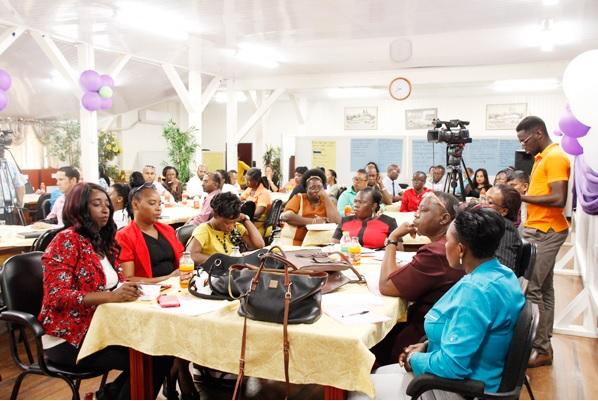
July 8, 2025 - In a landmark step for education in Guyana, the Ministry of Education on Thursday launched the New and Revised National Literacy Programmes; the most comprehensive and ambitious literacy initiative in the nation’s history.
This transformative, research-driven, and culturally grounded set of programmes will span from nursery through secondary school, with targeted support for struggling readers and engagement at the community level, ensuring no learner is left behind.
The launch marked the culmination of months of rigorous planning, stakeholder engagement, and resource development, led by Assistant Chief Education Officer (Literacy), Ms. Stembiso Grant, under the direction of the Honourable Minister of Education, Priya Manickchand.
In delivering the feature address, Minister Manickchand emphasised the historic scope of the initiative.
“As far as literacy programmes and interventions go, this is the most comprehensive package we have ever done as a ministry, as a country. For every level of children all across Guyana, this is unmatched and I suspect strongly that our Caribbean brothers and sisters will one day adopt it as their own,” she said.
Noting that the programme officially begins in schools on September 8th, the Minister confirmed that teachers and literacy officers have already undergone extensive training in all regions, ensuring readiness for immediate implementation.
Minister Manickchand also underscored the importance of collaboration with families.
“While we were building this out, we asked for the partnership of parents. There are going to be things that parents must do if this is to succeed. Literacy cannot begin and end at school, it must be nurtured at home as well,” she stressed.
She further praised the Ministry’s parallel success in revitalising school libraries, an effort that complements the literacy drive.
“We didn’t celebrate it, but every primary school now has a library; a beautiful, vibrant space stocked with the best books, from Harry Potter and Captain Underpants to Nancy Drew, Hardy Boys, and timeless classics. The aim is to have a reading library in every single school across this country, primary and secondary,” she said.
In her remarks, Ms. Grant detailed the strategic design and far-reaching nature of the programmes. She recalled the moment in September 2023 when Minister Manickchand issued a decisive charge.
That challenge sparked a process of consultation with headteachers, teachers, parents, literacy experts, and education officers to diagnose the gaps, identify solutions, and build a robust literacy structure capable of meeting the needs of all learners, from the earliest nursery pupils to adolescents in secondary schools who struggle with reading.
The result is a national continuum of literacy development. At the nursery level, children will now receive daily, structured foundational literacy instruction using newly revised, culturally relevant resources such as the Adventures with Letters and Sounds series and the Roraima Readers, alongside guided reading and writing sessions. This intentional, skill-building approach will carry through to the primary years, where daily “Letters and Sounds” sessions, a restructured Literacy Hour, and the Atlantic Readers will ensure mastery of phonemic awareness, fluency, vocabulary, comprehension, writing, and grammar.
For learners who are below grade level, the BRIGHT (Bringing Reading Improvements to Greater Heights – Together) Programme will provide small-group, intensive intervention at both the primary and lower secondary levels. Delivered by Literacy Support Teachers, BRIGHT is designed to equip struggling readers with the tools they need to progress confidently.
The programmes also extend beyond the classroom. In addition to strengthening and expanding school libraries, the Ministry is partnering with community organisations to bolster public libraries, support literacy in institutions such as the Juvenile Centre and The Palms, and introduce adult literacy opportunities. This whole-community approach is further supported by a new literacy website and blog, a suite of digital and print resources, and targeted teacher training.
Significant investment underpins the rollout. The National Literacy Department’s expanded budget has enabled the recruitment of more Regional Literacy Officers, the appointment of Literacy Committee Members in every district, and the provision of instructional materials and resources in every region. Seven national literacy officers, increased regional teams, and over 160 nursery Literacy Committee Members, a first for Guyana, now form part of the strengthened literacy infrastructure.
Looking ahead, Ms. Grant noted that the focus will shift to the implementation phase, monitoring, coaching, and supporting teachers, finalising the National Literacy Plan, digitising reading assessments, establishing a research section in the Literacy Department, and strengthening partnerships with institutions such as the Cyril Potter College of Education, NCERD, and the National Special Education Needs and Disabilities Unit to ensure inclusion for all learners, including those requiring Braille resources.
With unprecedented investment, robust systems, and a united national effort, the New and Revised National Literacy Programmes aim to ensure that every child can read with confidence, write with clarity, and dream without limits.
Share this post