News3 min read
Local teachers benefiting from global cross cultural training
Teachers in Mabaruma Region One are currently the beneficiaries of a cross-cultural training programme which is being facilitated by Limited Resource Teacher Training [LRTT], a global teachers’ training movement which…
Published by Ministry of Education
Teachers in Mabaruma Region One are currently the beneficiaries of a cross-cultural training programme which is being facilitated by Limited Resource Teacher Training [LRTT], a global teachers’ training movement which caters to teachers in under-resourced countries.
The organisation has been lending its support to Guyana through School of the Nations which has been working closely with the Ministry of Education to allow as many schools as possible to benefit from the training LRTT brings.
Explaining how the programme works globally, LRTT Programme Manager, Ms Emily Finnegan, said that “We facilitate the cross-cultural teacher training where we partner teachers from the United States, the United Kingdom [where LRTT is based] and Australia, with local communities across 10 different countries, one of which is Guyana, to practice innovative teacher training methods and really learn from each other in diverse communities.”
The layout of the programme, she disclosed, entails teachers affiliated with the programme doing observations in the schools in the communities they visit.
“Our teachers work with about five local teachers each – a one-to-five ratio – and they will work with the teachers in schools doing in-classroom observations, and then we come together for conference days where our fellows will co-deliver, co-plan and co-facilitate training with the local teachers,” said Finnegan.
According the LRTT Manager, already the outcome of the programme has realised tremendous success across the globe. She shared that, at the least, some 93 percent of the teachers, who have benefitted over the years, have been able to gain confidence and develop outstanding teaching skills.
“It makes them more empowered in the profession working alongside others to really value the role of a teacher, even in societies that really don’t see that role as a high value job,” said Finnegan.
But the exchange of knowledge, she disclosed, is certainly not a one-sided affair since “our fellows learn so much from these limited resource contacts that they can take back to their classrooms to the US or the UK, and that is knowledge they can share in more globalised classrooms as well. Our fellows are seeing a diversity of cultures and languages, they go to these communities and it helps them engage in that cross-cultural learning process.”
According to Finnegan, although LRTT is only now lending its support to Mabaruma, it has been facilitating training programmes here for the past three years. Already teachers in Berbice and Georgetown have benefitted.
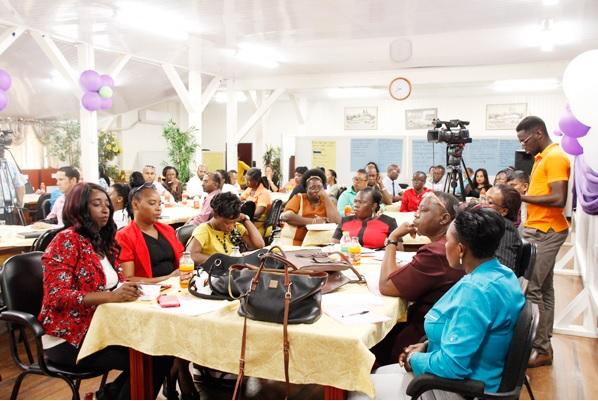
However, LRTT is currently lending even more support to Guyana through an ongoing educational leadership conference being spearheaded by School of the Nations.
“I am doing a workshop on new models in teacher training and this is really a highlight of what our programme do. The goal of my session is really to, as a group, highlight what the qualities are of our strongest teachers; what the attributes are that we should be training for and what are the challenges here in Guyana and across the Caribbean that teachers face with regard to professional development, and try to see where our niche can be,” said Fennigan.
Share this post